
This post is a recording of my AI learning
Reference Image
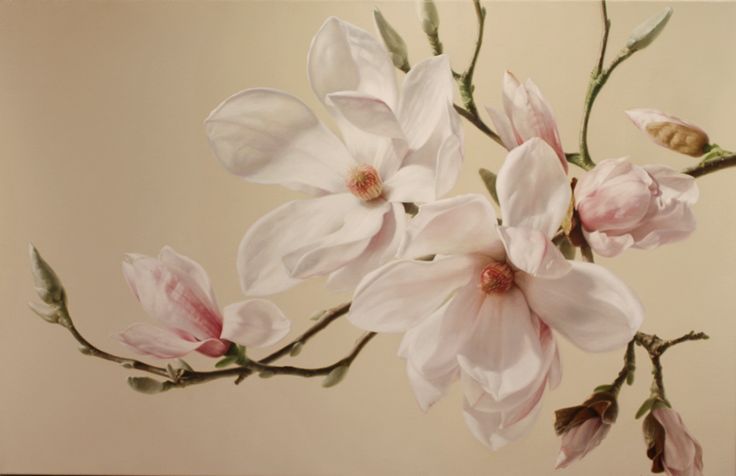
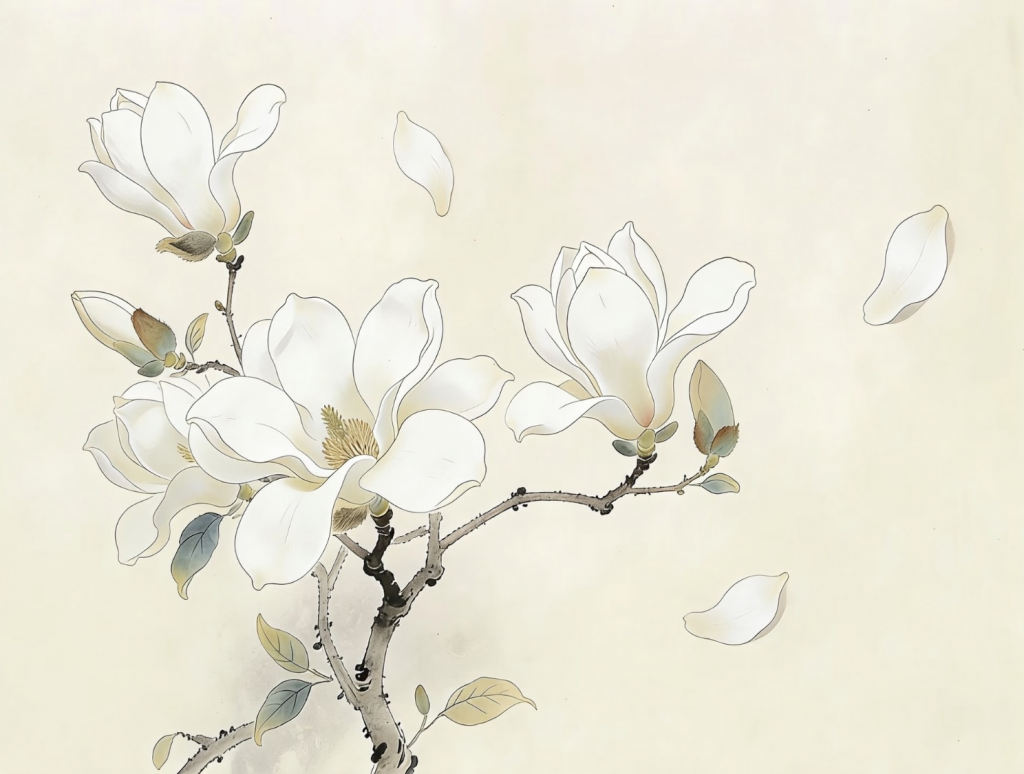
Use Image 0 as the strict content reference and Image 1 as the painting style reference only.
Convert Image 0 into a traditional Chinese gongbi-style painting similar to Image 1, while preserving the original magnolia flower photo composition as closely as possible. Keep the exact magnolia flower shapes, branch silhouette, buds, and layout from Image 0. The image must still be clearly recognizable as the same magnolia branch from the original photo.
Apply a soft, delicate painted appearance with clean hand-drawn details and subtle pale color transitions. Use thin metallic gold outlines instead of dark ink outlines. Replace the original background with a flat medium-gray background.
This is only a style conversion task. Do not redesign the image. Do not change the flower species. Do not add decorative elements. Do not invent new petals, branches, or leaves. Keep the original structure of Image 0, but render it in the painting style of Image 1.Use Image 0 as the strict content reference and Image 1 as the painting style reference only.
Convert Image 0 into a traditional Chinese gongbi-style painting similar to Image 1, while preserving the original magnolia flower photo composition as closely as possible. Keep the exact magnolia flower shapes, branch silhouette, buds, and layout from Image 0. The image must still be clearly recognizable as the same magnolia branch from the original photo.
Apply a soft, delicate painted appearance with clean hand-drawn details and subtle pale color transitions. Use thin metallic gold outlines instead of dark ink outlines. Replace the original background with a flat medium-gray background.
This is only a style conversion task. Do not redesign the image. Do not change the flower species. Do not add decorative elements. Do not invent new petals, branches, or leaves. Keep the original structure of Image 0, but render it in the painting style of Image 1.
Outcome

Image 0 is the stitch pattern reference.
Image 1 is the main content reference.
Image 2 is the final texture and rendering style reference.
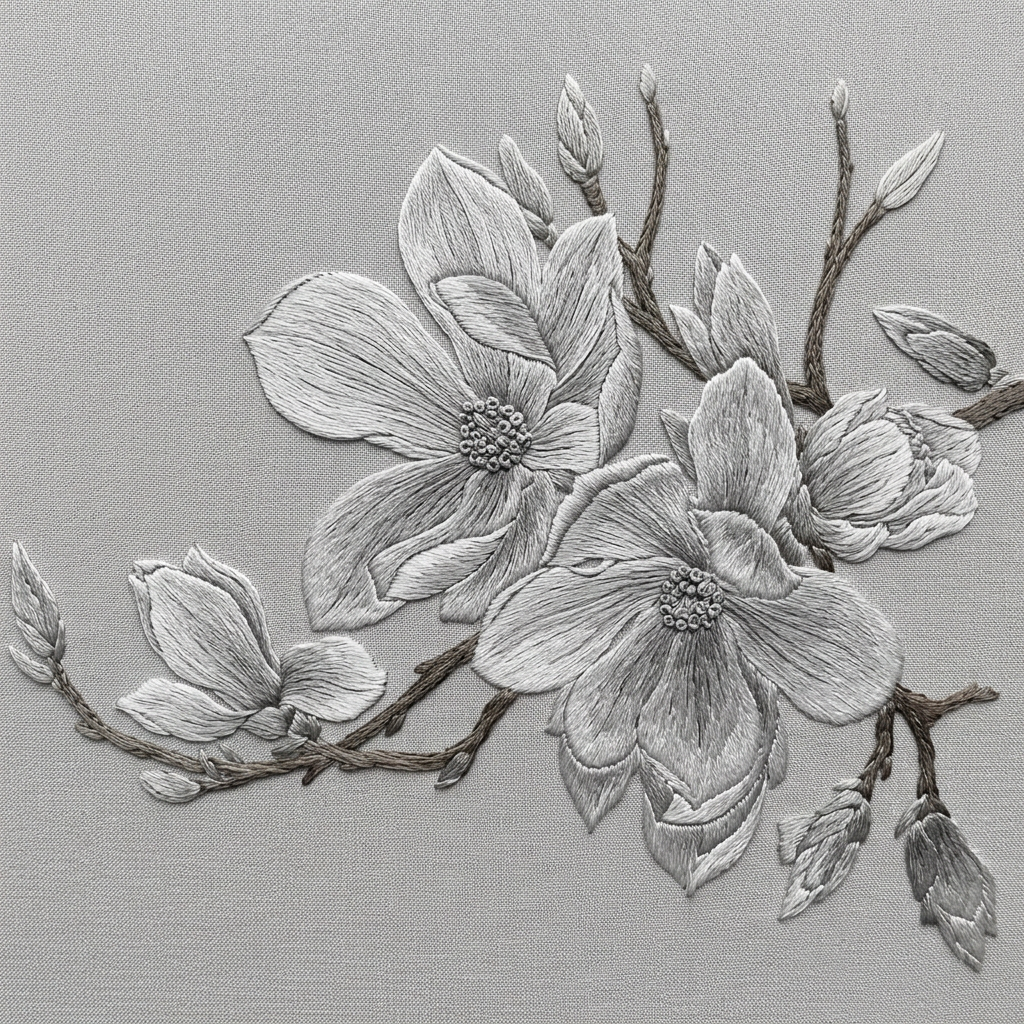
Transform Image 1 into a detailed embroidery-style grayscale artwork. Keep the original magnolia composition, flower shapes, petals, buds, branches, and layout from Image 1. Do not redesign the flowers or change the composition.
Use Image 0 as a reference for the stitch structure and thread direction. Apply dense, clean embroidery stitches across the petals, leaves, buds, and branches. Make the stitch direction follow the form of each shape naturally, especially along the magnolia petals and floral centers.
Use Image 2 as the target visual style: highly detailed thread texture, visible stitch lines, layered embroidery depth, and a refined black-white-gray tonal range. The final result should be monochrome or grayscale only, with rich thread detail and strong stitch definition. Make it look like a close-up embroidered textile artwork rather than a flat illustration.
Important requirements:
- preserve the original composition of Image 1
- keep the flower species as magnolia
- convert the artwork into embroidery texture
- use visible fine stitch detail
- use grayscale / black-white-gray only
- no color except grayscale values
- no redesign, no new flowers, no extra decorative elements
The result should look like Image 1 translated into a realistic embroidery rendering with the detailed needlework quality of Image 2.
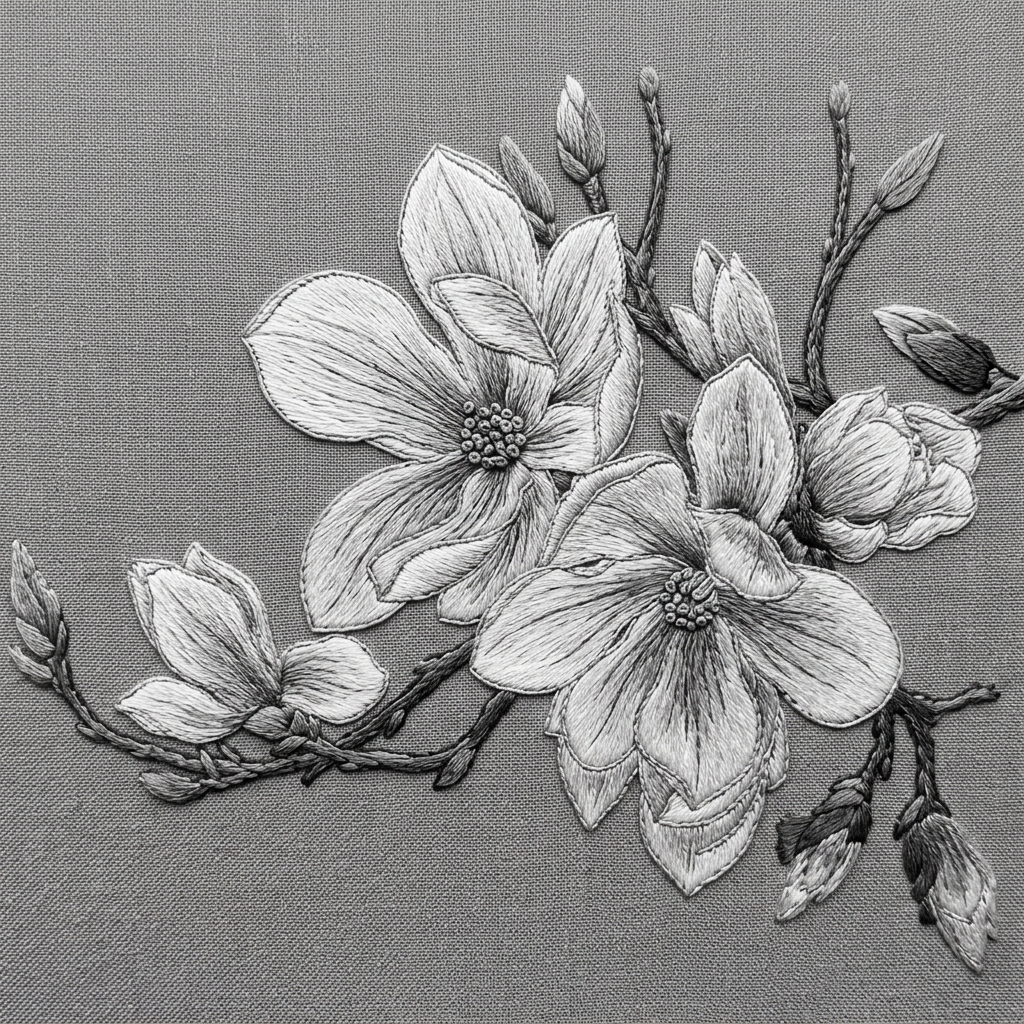
Use Image 1 as the strict content reference, Image 0 as the stitch pattern reference, and Image 2 as the target embroidery rendering reference.
Convert the magnolia artwork in Image 1 into a highly detailed black-white-gray embroidery image. Preserve the original composition, flower shapes, buds, branches, and layout. Do not redesign the flowers or add extra decorative elements.
Render the entire image using dense embroidery stitches with realistic thread texture. The stitch direction should follow the form of each petal, leaf, flower center, and branch naturally. Use grayscale only.
Important: do not use visible contour outlines or drawn linework. Do not outline the petals or leaves. The edges and forms should be defined only by stitch direction, stitch density, layering, and tonal contrast, similar to the effect in Image 2. The result should look like realistic embroidery, not line art filled with stitches.
The final image should be monochrome, highly detailed, and tactile, with subtle relief and dense thread structure.
Leave a Reply